CTC has a proven track record combining individual systems together to perform a larger and more complex tasks. We ensure systems scale properly, supporting more users/functions without degrading performance. Using a highly disciplined, repeatable, and CMMI Level 3 certified process CTC has developed numerous technological advances for its customers while maintaining and increasing the quality and reliability of its solutions.
CTC offers experienced, vendor-certified personnel to secure your enterprise networks and systems. We are partnered with product leaders in the commercial cyber market to bring dual-use cyber technologies to the defense and security sectors to support efforts in defending cyberspace. Our highly trained, certified, and cleared Cybersecurity team provides our DoD, Federal and private sector customers with cutting edge expertise and unsurpassed experience securing information systems, networks, and enterprise systems from a continuously evolving threat environment. Our security approach is concerned with more than securing systems; we provide our customers with a cost-effective total Security Management Program, incorporating a process of Information Risk Management, reducing the overall level of risk to the customer from malware, attackers, and environmental threats.

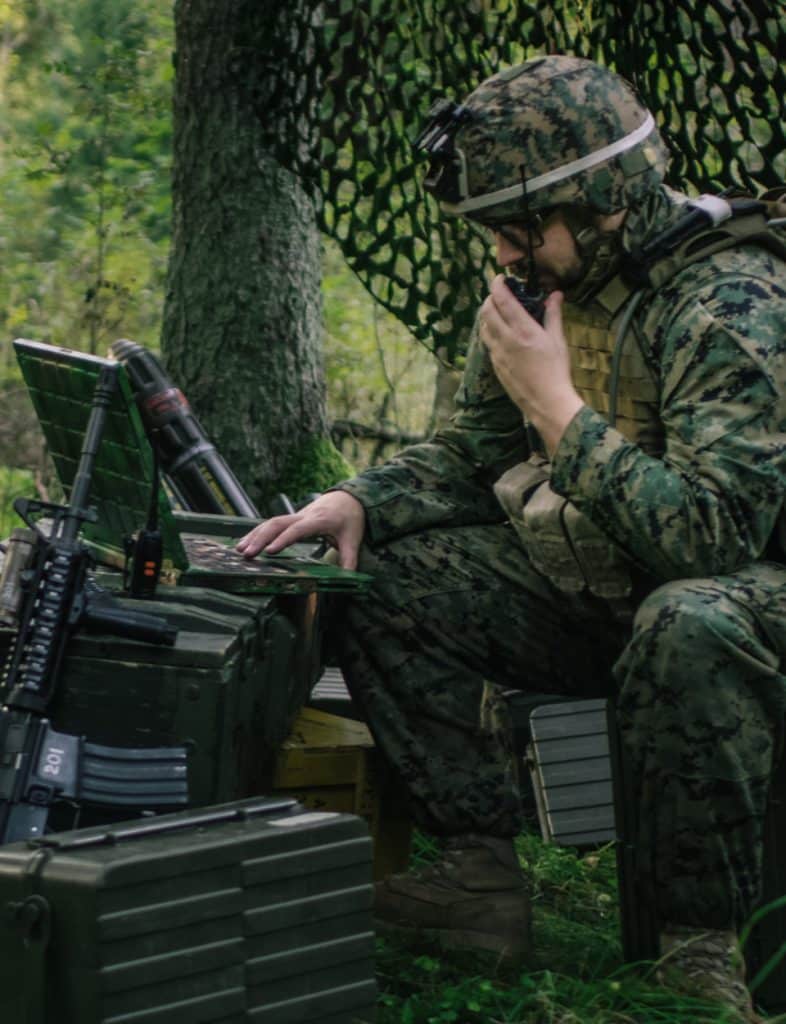
CTC supports the Joint All-Domain Command and Control (JADC2) concept by enabling the connection of sensors across services and domains into a unified network. With experience operating and supporting each services network,
CTC is uniquely positioned to enable interoperability across all operating environments. We enable commanders to make better decisions by making networks and data interoperable – taking data from various sensors, processing the data using artificial intelligence algorithms to identify items of interest and then recommending the appropriate decision to drive action. This shortens the decision-making cycle to hours, minutes, or potentially seconds compared with the outdated legacy process of taking long periods of time to analyze the operating environment and take action.
We adapt to the contested environment by adopting dual-use technology; technology available in the commercial environment and enabling it to support the contested domain. We support the multi-domain environment providing seamless coordination and operations across the battle theater. We develop and implement sensors and systems that are designed for this new environment that enable distributed operations, which is a critical need in the contested environment.
Using these systems, we generate and take data that is collected across various geographical locations; but needs to be available locally. Our data and software processing are distributed to reduce the impact of any particular site or hardware failure to support distributed operation and agile combat employment.
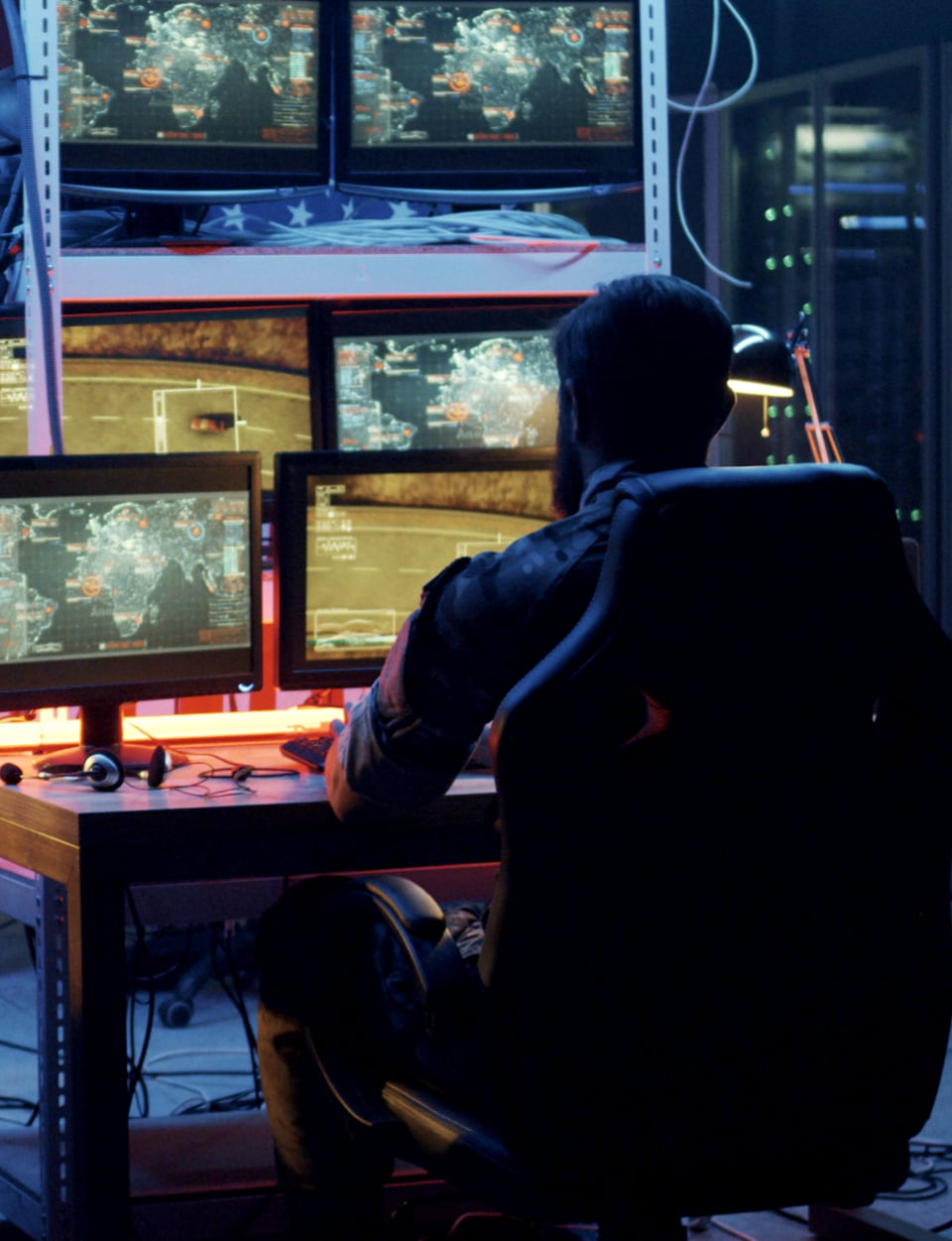
CTC creates networks with the ability to anticipate, withstand, recover from, and adapt to attacks, adverse conditions, stresses, or compromises.
CTC communications engineering encompasses multiple security disciplines, including security architecture engineering, security assessment and authorization (A&A) support, system vulnerability identification and remediation, security artifact and
authorization (A&A) support, system vulnerability identification and remediation, security artifact and supporting document production, lifecycle Information Assurance Vulnerability Management (IAVM), penetration testing and ethical hacking, and maintenance of Federal Information System Management Act (FISMA) compliance. Our staff possesses the DoD 8570.01-M mandated Information Systems security certifications (IAT/IAM level II and III) required for supporting DoD IA programs and projects, to include certifications for CISSP, CISM, CEH and Security +.
CTC automates the integration of security at every phase of our software development lifecycle from initial design through integration, testing, deployment, and software delivery – as a matter of culture rather than process.
We collaborate between development and operations teams to integrate security teams in the
software delivery cycle. We scan repositories for security vulnerabilities, conduct early threat modeling and security design reviews as well as static code analysis, and code reviews during our development process. We automate the security gates to keep the DevOps workflow from slowing down and by selecting the right tools to continuously integrate security- such as developing an integrated development environment with security features. Our DEVSEC Ops approach is built on the cultural changes of integrating security at the outset of every project.
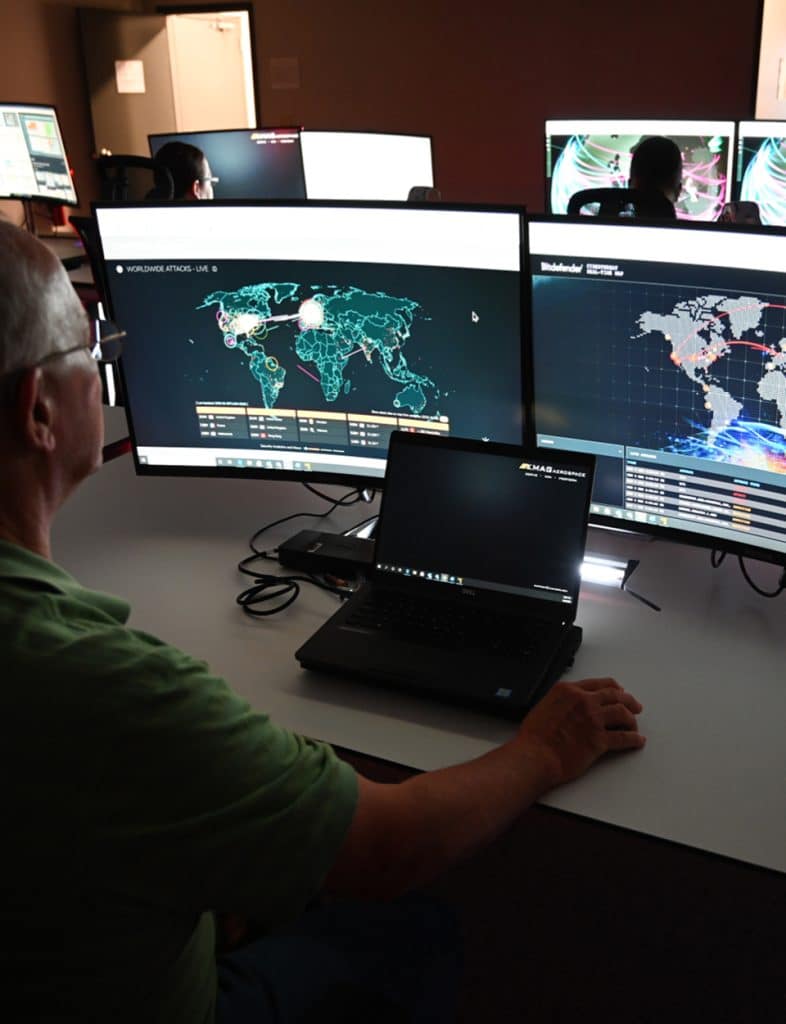
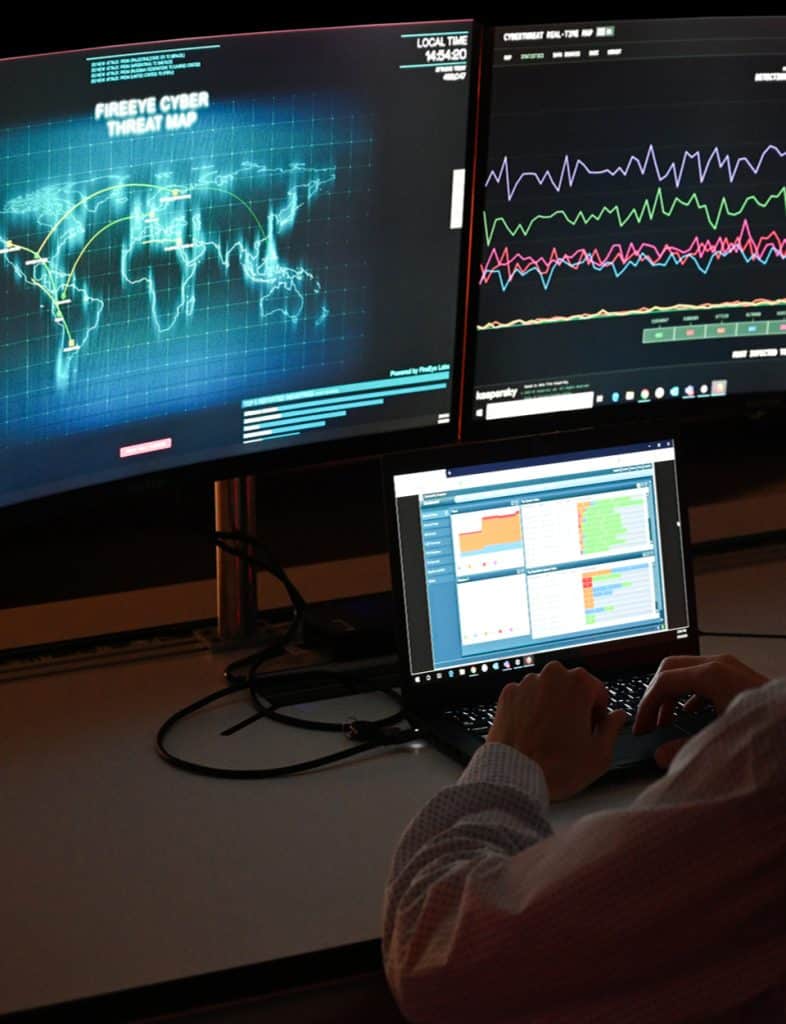
CTC security engineers support Cross Domain Solutions (CDS) and have assisted various US Government customers including Army sites and the Army Cross Domain Solutions Office (CDSO) with ensuring policies and procedures are followed, and requirements met for fielding Defense Information Infrastructure (DII) Guards. We review and validate requirements, working with the DISA Connection Approval Office or the supporting CDSO, and assist with fielding Cross Domain Solutions (CDS) technology baselines.
Our Cyber Security/Information Assurance (CS/IA) Engineering encompasses multiple security disciplines, including security architecture engineering, security assessment and authorization (A&A) support, system vulnerability identification and remediation, security artifact and supporting document production, lifecycle Information Assurance Vulnerability Management (IAVM),
penetration testing and ethical hacking, and maintenance of Federal Information System Management Act (FISMA) compliance. Our IA staff possesses the DoD 8570.01-M mandated Information Systems security certifications (IAT/IAM level II and III) required for supporting DoD IA programs and projects, to include certifications for CISSP, CISM, CEH and Security +. Additionally, members of the technical staff possess a Top Secret (TS) security clearance, with no team member having less than a Secret clearance.

CTC’s cyber security team has extensive experience providing comprehensive, life cycle RMF management and technical support for several tactical and non-tactical U.S. Army information systems owners. Our RMF program support has included:
As part of our lifecycle A&A program support, CTC ensures that our customer’s information systems maintain a post-deployed security posture in compliance with requirements of the Federal Information Security Management Act (FISMA). We participate in the preparation and execution of the FISMA Security Controls Review to ensure DoD and Federal information systems comply with FISMA requirements. The validity and effectiveness of key
security controls are evaluated, to include an analysis of disaster recovery and continuity of operations, and reviews of policy and process incident response planning, production code changes to determine IA impacts, current IAVM policies and management, and periodic integrity testing. CTC provides our customers a formal report of annual FISMA review results for specific DoD information systems. CTC is experienced in, and currently supports the Information Assurance Vulnerability Management (IAVM) process for our customers. Current support includes application of mandated DoD and Army security configuration changes to customer Information Systems security baseline by application of patches as defined by Information Assurance Vulnerability Alerts (IAVAs), Information Security Vulnerability Bulletins (IAVB), and Technical Advisories (TA). Additionally, CTC provides IA Configuration Management by maintaining a database of all relevant IAVM, IAVB, and TB, as well as change and version control of RMF artifact documentation.

To ensure a successful and thorough security assessment of customer information systems, CTC identifies and implements applicable Security Technical Information Guides (STIGs) and Security Requirements Guides (SRGs). We run automated scan tools against the network, operating systems, and compatible applications, conducting additional manual assessments as necessary, using approved DoD and Army solutions:
All scan tools are updated to use the latest STIG and IAVM audits, feeds, and plugins. We supplement these scans with a manual review of systems applications for requirements not assessed by the automated tools. We evaluate developed applications using the DISA Application Security and Development STIG checklist, which provides security guidance promoting and ensuring the development, integration, and update of secure applications. This assessment includes: Assessment results are delivered via a Security Assessment Report (similar artifact per customer requirements), identifying, and summarizing potential vulnerabilities, threats, risks, and mitigation strategies for customer review. We confer with the customer and implement mitigation or remediation measures at the customer’s direction.
CTC plans, designs, implements, secures, and manages highly complex, mission-critical communication architectures and networks. CTC delivers complete lifecycle communications, infrastructure, and support for the world’s most demanding clients – from the U.S. Department of Defense to leading communication service providers and contractors, equipment manufacturers, financial services firms, and pharmaceutical companies. These organizations have come to recognize our extraordinary expertise in delivering solutions that meet their objectives, mitigate their risks, and control all of their network-related costs.

For more than 10 years, CTC has spearheaded satellite communications solutions for the Department of Defense. We currently conduct the Joint Management and Operations Subsystem (JMOS), a completely software-based tool to manage Internet Protocol (IP)-based communications over Worldwide Global SATCOM (WGS). We provide systems engineering, information assurance, testing & integration, acquisition, logistics, configuration
management and software support on a variety of satellite and networking programs in all aspects of the satellite ground segment -Terminals/RF, Baseband and Control. Projects we have worked include: Modernization of Enterprise Terminals (MET), Enhanced Bandwidth Efficient Modem (EBEM), Teleport, Standardized Tactical Entry Point (STEP), Regional Hub Node (RHN), Joint Management and Operations System (JMOS), Replacement Remote Frequency Indicator Selector (RRFIS), Replacement Frequency Modulation Order Wire (RFMOW), Control Monitor & Alarm (CMA), Integrated Satellite-GIG Operations Management (ISOM) and other critical initiatives in the wideband community.
CTC possesses unique expertise in the issues surrounding transporting IP-based services over SATCOM networks. We have in-depth knowledge of the waveforms, modem systems and management/control interfaces of both commercial and military FDMA and MF-TDMA systems, as well as experience optimizing transport of converged services in constrained-bandwidth environments. Customers can trust CTC to help them engineer and operate cost-effective and reliable IP SATCOM networks.
CTC engineers build converged voice, video, and data networks for over 15 years. During this time, we helped develop some of the inaugural VoIP services for a major telecom. With a strong expertise with real-time media signaling and transport, as well as service architectures, applications, and management, we can help enterprises, service providers and call centers in all phases of engineering the unified communications life cycle.


CTC specializes in the largest, most complex multi-service fiber-optic projects, DWDM/OTN design, testing, installation, and integration with legacy SONET and packet networks. We have brought together leading experts on network integration, installation, and implementation-ranging from Lucent Laboratory pioneers who helped build a major telecom provider’s network to best-in-class installers and project managers.
CTC specializes in the largest, most complex multi-service fiber-optic projects, DWDM/OTN design, testing, installation, and integration with legacy SONET and packet networks. We have brought together leading experts on network integration, installation, and implementation-ranging from Lucent Laboratory pioneers who helped build a major telecom provider’s network to best-in-class installers and project managers.